Qui nous sommes
À propos de Ethics 1st®
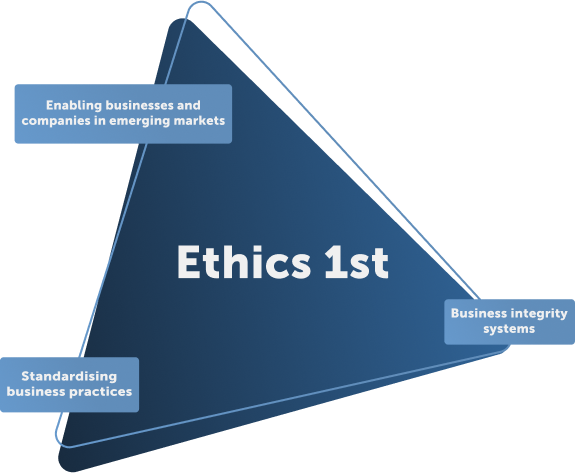
Ethics 1st® est une initiative multipartite dirigée par le CIPE qui permet aux entreprises des marchés émergents, notamment en Afrique, de normaliser leurs pratiques commerciales, de développer des systèmes solides de gouvernance d’entreprise et d’intégrité des affaires, et de le démontrer à leurs partenaires et homologues mondiaux dans le but de créer des voies pour un investissement responsable et durable dans la région.
Comment les entreprises s’inscrivent
Les entreprises africaines commencent leur parcours de conformité en s’inscrivant sur Ethics 1st et progressent à travers trois niveaux qui démontrent la force de leur engagement en faveur de l’intégrité des affaires.
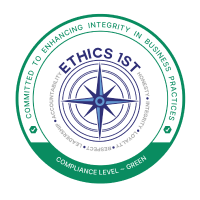
Vert
Les entreprises classées dans la catégorie Vert de Ethics 1st® démontrent un engagement envers l’intégrité des affaires en signant un engagement d’intégrité d’entreprise et en évaluant leur profil d’intégrité d’entreprise par rapport aux meilleures pratiques mondiales.
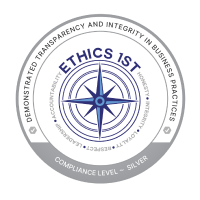
Argent
Les entreprises classées Argent dans Ethics 1st® démontrent un engagement envers l’intégrité des affaires en améliorant leur profil d’intégrité des affaires évalué par rapport aux meilleures pratiques mondiales.
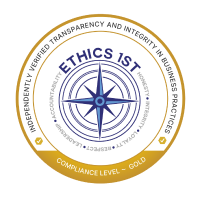
Or
Les entreprises classées Or dans Ethics 1st® offrent aux investisseurs et partenaires une assurance en faisant vérifier de manière indépendante leur intégrité commerciale et leurs normes de conformité, démontrant ainsi un engagement de leadership en matière de responsabilité et de transparence.
Valeurs de Ethics 1st®
Construire un écosystème d’entreprises avec des valeurs partagées de gouvernance d’entreprise et d’éthique.

La loyauté consiste à être fidèle aux engagements ou obligations. La loyauté implique une adhésion ferme à une personne ou à une chose, ou au serment ou à la promesse par lesquels un lien a été contracté, en résistant à toute tentation d’abandonner ou de se retourner contre.

L’honnêteté est la droiture de caractère et d’action. Cela implique d’être véridique, digne de confiance, et de s’abstenir de mentir, de déformer, de tricher ou de voler. Ethics 1st® défend les vertus de vérité, d’équité et porte un profond respect à ce qui est juste et équitable pour tous.

Le leadership est un processus d’influence sociale qui maximise les efforts des autres vers l’atteinte d’un objectif. Les dirigeants sont censés montrer l’exemple à ceux qui les entourent des hauts idéaux qu’ils défendent.

L’intégrité est l’adhésion à un code de valeurs morales qui implique la fiabilité, l’incorruptibilité et l’équité. Ethics 1st® reconnaît qu’un individu ou une organisation doté(e) d’intégrité est digne de confiance, de responsabilité et d’engagement.
La responsabilité est la disposition à fournir une explication ou une justification de ses jugements, intentions et actions, en reconnaissant et acceptant la responsabilité des résultats. Être responsable, c’est accepter d’être tenu de défendre les objectifs et idéaux imposés à la partie responsable.

Le respect implique une grande considération, l’honneur ou l’estime pour les sentiments, les souhaits, les droits et la dignité de tous.
Comité consultatif
Le Comité est composé d’individus hautement qualifiés venant d’Afrique et des États-Unis, possédant une expertise en matière de conformité éthique et de gouvernance d’entreprise, notamment avec des expériences dans les institutions financières privées, les entreprises multinationales et les banques, les organisations professionnelles, les chambres de commerce et les associations d’affaires opérant en Afrique subsaharienne.
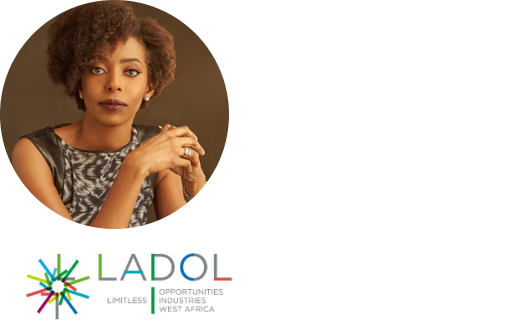
Dr. Amy Jadesimi
Dr. Amy is the Chief Executive Officer of LADOL, a $500 million Industrial Free Zone. Amy got financial training at Goldman Sachs & Stanford Graduate School of Business & medical training at Oxford University.
Her accolades include being appointed to UNDP Steering Committee on SDGs (2019) and the UNICEF Advisory Group (2019). Dr. Jadesimi was voted the Oil and Gas Leading Woman of the year (Foreign Investment Network, 2018), one of Top 25 Africans to Watch (Financial Times and she is a member Advisory Board of Prince’s Trust International and the International Chamber of Commerce (ICC) Advisory Group on Trade Finance (ATF) and contributor to Forbes.
Dr. Jadesimi received her MBA from Stanford University, MA (OXON) and her BMBCh from Oxford University).

William Steinman (Rtd)
William Steinman has been providing advice to multinational companies regarding the Foreign Corrupt Practices Act (the “FCPA”) and other anti-corruption laws for over a quarter century. Prior to establishing Steinman & Rodgers, Mr. Steinman was the head of the international practice group at a major U.S. law firm.
Mr. Steinman is considered an authority in the engagement of overseas third parties, such as sales representatives, consultants, distributors/resellers, logistics service providers, and other supply chain partners.
He is an adjunct professor at Catholic University’s Columbus School of Law and Roger Williams University School of Law, where he teaches advanced seminars on international anti-corruption law. Mr. Steinman received his J.D. from the Harvard Law School in 1993, and graduated summa cum laude from the University of Vermont in 1990. He is a member of the District of Columbia Bar.
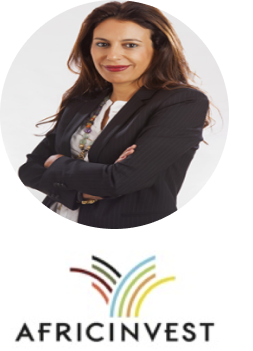
Samia Tnani
Samia Tnani, Chief Credit Officer at AfricInvest Private Credit, the debt vehicle of the AfricInvest Group is a seasoned credit professional with strong expertise on the African continent. In her current role, Samia drives credit transactions for African SMEs to finance their growth in a sustainable manner.
Previously, she was the General Manager of the Université Paris-Dauphine, Tunis Campus, where she led the launch of the university's campus in Tunis. Samia also has 11 years of banking experience with Citibank in Tunis, her last position being Country Risk Manager.
Samia is passionate about gender finance, she volunteers with the Cartier Women Initiative as Jury member for Sub-Saharan Africa. She holds a board position with the Fondation de la Maison de Tunisie in Paris.
Samia is a graduate of IHEC Carthage (BA), and the University of Paris-Dauphine (Master and PhD in Finance).

Thomas Fox
Thomas Fox has practiced law in Houston for 30 years. He is an Independent Consultant, assisting companies with anti-corruption and anti-bribery compliance and international transaction issues. He specializes in bring business solutions to compliance problems. He was most recently the General Counsel at Drilling Controls, Inc., a worldwide oilfield manufacturing and service company.
Tom is the author of the award winning FCPA Compliance and Ethics Blog and the international best-selling book “Lessons Learned on Compliance and Ethics”. He is a monthly columnist and weekly blogger for Compliance Week; a monthly columnist and frequent contributor to the SCCE Magazine and a Contributing Editor to the FCPA Blog.
Thomas is the founder of the Compliance Podcast Network and a notable speaker on issues related to compliance and ethics, the use of social media in compliance and corporate leadership

Mohamed Komara
Mohamed Komara is a Senior Legal and Compliance Counsel with expertise spanning across the areas of strategic and operational management of regulatory matters, legal, compliance and corporate governance matters within sub-Saharan Africa. In January 2019, Mohamed assumed the position of General Counsel and Compliance Officer, Central, West & Central Africa Region and oversees the legal and compliance portfolio for Nestlé’s businesses in the Region (25 countries).
Before Nestlé, Mohamed had a wealth of experience from the FMCG and private sector in sub-Sahara Africa, having worked with multinationals such as Ernst & Young Senegal, British American Tobacco, GlaxoSmithKline, Lafarge-Holcim and The Coca-Cola Company. Aspects of his work record include implementation of Good Governance standards and proper adherence to Code of Business.
Mohamed holds a master’s degree in International Business Law and Tax. He enjoys sports, travelling, reading, music and is very passionate about developing Young African talents.
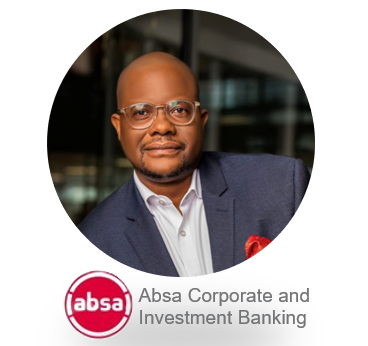
David Mparutsa
As Head of Enterprise & Supply Chain Development (ESD) for Absa Corporate & Investment Bank, David is responsible for defining and implementing the ESD strategy, which looks to leverage corporate partnerships to improve access to finance for suppliers, distributors, and retailers in corporate value chains. The strategy has a strong focus on driving localisation and financial inclusion through financing Small and Medium sized entities with corporate offtake or distribution agreements while also ensuring the SMEs develop adequate skills to manage and grow their businesses sustainably.
Before his current position, David held various roles in Risk and Finance across the bank. This included Head of Risk and Control for Global Finance and Transactional Banking and Head of Product Control for Africa Markets and Treasury, responsible for the migration of the Absa African markets from vanilla forex based banking books into full trading books covering forex, fixed income, equities and risk management products. Prior to joining Absa, he worked on the Credit Hybrids Desk at JP Morgan in London. He also has experience in Audit and Consulting from PricewaterhouseCoopers and Academics from the University of the North-West in South Africa where he lectured Accounting.
David currently serves as an advisory committee member of the World Bank Gender Equal & Inclusive Just Transition Coalition reference group which seeks to enhance participation of women owned SMEs in the Just Energy Transition in South Africa. David is a qualified Chartered Accountant and holds a World Bank certification for Banking Executives through the George Washington University. He has recently completed a transformational leadership course through IMD business school in Switzerland.
Partenaire de financement (NED)
National Endowment for Democracy (NED) est une fondation privée américaine à but non lucratif dédiée à la croissance et au renforcement des institutions démocratiques dans le monde.
Partenaires de ressources (Membres de l’ABIN)
Africa Business Ethics Network (ABIN).
L’ABIN est le principal vecteur de diffusion d’un programme unique de formation à l’intégrité et à l’éthique des affaires, avec un soutien de mentorat aux entreprises et aux dirigeants d’entreprises dans 13 pays d’Afrique. Le réseau fonctionne avec 75 professionnels de la conformité dont le rôle de mentors et de champions de l’intégrité a permis à la formation de la CIPE d’avoir un effet multiplicateur dans toute la région. Au cours des 5 dernières années, les professionnels d’ABIN ont soutenu plus de 250 entreprises et leaders du secteur, transformant la culture et le comportement, une entreprise à la fois.







“Losses a country may suffer as a result of non-compliance with governance standards may be in the form of multinationals deciding to close their operations in the country resulting in citizens losing their jobs and the country losing revenue, reputational risks and diplomatic risks.”